




Most people focus only on the design and comfort of orthotic braces, back supports, and medical walking boots, but ignore the core factor that determines product performance and service life: material quality.
Many low-priced orthotic products on the market use ordinary plastic materials. They are cheap but have obvious defects: insufficient support force, easy deformation under pressure, brittle cracking after slight impact, and unable to maintain long-term stable correction and protection effects.
To solve the common pain points of ordinary plastic orthotics, we adopt medical-grade ABS engineering polymer as the core material for our waist support brackets, electronic back corrector shells, and medical walking aid boots. As a high-performance thermoplastic polymer widely used in medical devices, ABS perfectly balances lightweight flexibility, strong structural support, impact resistance and dimensional stability, becoming the ideal material for professional orthotic and rehabilitation equipment.
What Makes ABS Engineering Polymer Different From Ordinary Plastic?
Data Chart 1 Suggestion: ABS vs Ordinary Plastic Performance Comparison Chart
|
Performance Parameter
|
Ordinary Plastic (PP/PE)
|
ABS Engineering Polymer
|
|---|---|---|
|
Structural Support
|
Weak, easy to bend and deform
|
High rigidity, stable supporting force
|
|
Impact Resistance
|
Brittle, easy to crack under collision
|
Strong toughness, anti-drop and anti-impact
|
|
Dimensional Stability
|
Easy to deform after long-term stress
|
No deformation under long-term pressure
|
|
Medical Safety
|
Ordinary grade, not suitable for long-term skin contact
|
Sterilizable, skin-friendly, medical standard
|
|
Service Life
|
Short, easy aging and damage
|
Durable, anti-aging and wear-resistant
|
ABS (Acrylonitrile Butadiene Styrene) is a professional engineering polymer, not ordinary civilian plastic. It integrates the high strength of acrylonitrile, the toughness of butadiene, and the molding stability of styrene. This unique composite structure enables it to outperform common plastic materials in all core indicators required by orthotic devices.
Core Application Advantages in 3 Major Product Scenarios
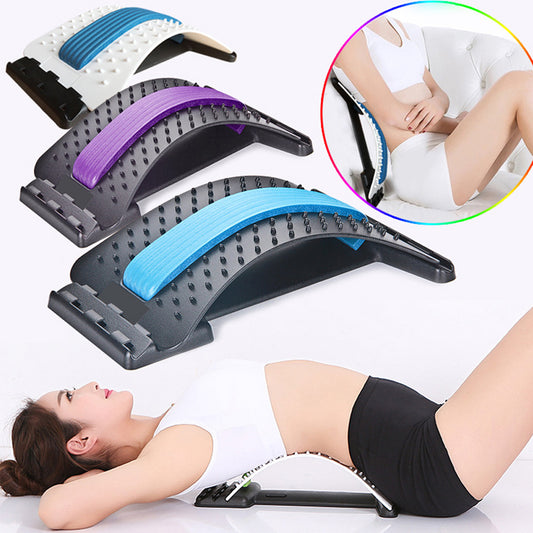
1. Waist Support Bracket: Stable Support, Relieve Lumbar Pressure
Image Suggestion: Close-up of ABS waist support bracket bearing pressure, showing no deformation under heavy load
The core function of the waist support bracket is to provide continuous and stable external support for the lumbar spine, disperse waist pressure, and correct bad sitting and standing postures. Ordinary plastic brackets will slowly bend and deform after long-term bearing human body pressure, resulting in reduced support effect and even lumbar strain aggravation.
ABS material has excellent structural rigidity and pressure resistance. It can maintain a fixed supporting angle for a long time, effectively support the lumbar spine, limit excessive lumbar flexion and torsion, and scientifically disperse back pressure. At the same time, its lightweight characteristics avoid the bulky and heavy feeling of traditional hard brackets, realizingstrong support without burden and adapting to daily office, walking and sedentary scenarios.
2. Electronic Back Posture Corrector Shell: Shockproof, Durable & Safe
Image Suggestion: Anti-drop test display of ABS corrector shell, no crack or damage after collision
Electronic back correctors are wearable electronic orthotic devices, and the shell material directly determines the product safety and service life. The equipment will inevitably encounter minor collisions, drops and daily friction during wearing and carrying. Ordinary plastic shells are easy to crack and break, which may damage internal electronic components and affect product use.
ABS engineering polymer has outstanding impact resistance and anti-fall performance. It can effectively buffer external impact, protect internal sensors and circuit structures from damage. In addition, the material has good electrical insulation and surface wear resistance, with smooth and burr-free molding. It is safe for long-term body contact, not easy to scratch the skin, and perfectly meets the long-term wearable safety standards of electronic orthotic equipment.
3. Medical Walking Boots: Medical-grade Stable Protection & Rehabilitation Support
Data Chart 2 Suggestion: Medical Orthotic Material Durability Test Data
Ordinary Plastic Walking Boot: Deforms after 300+ walking impacts, poor stability ABS Medical Walking Boot: No deformation or crack after 2000+ walking cycle tests, stable protection
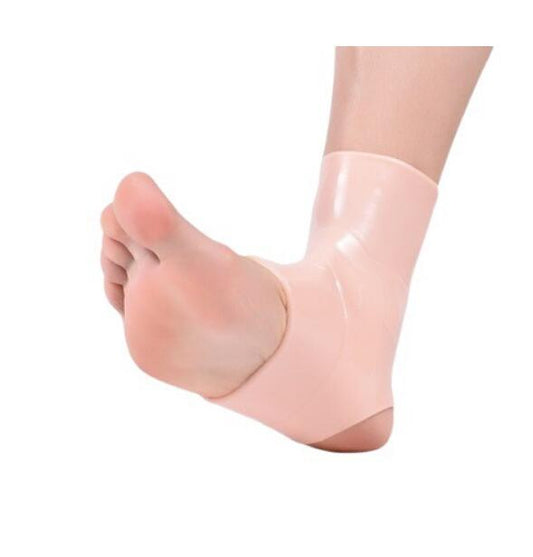
Medical walking aid boots are used for ankle sprain recovery, fracture postoperative rehabilitation and lower limb protection, which put forward extremely high requirements on material stability, safety and pressure resistance.
ABS material supports medical-grade sterilization treatment, with stable chemical properties, no odor, no skin irritation, and meets medical rehabilitation equipment standards. Its high structural strength can fix the lower limb and ankle joint in a correct rehabilitation posture, avoid joint displacement and secondary injury during walking, and provide stable rehabilitation support. Different from brittle ordinary plastic medical boots, ABS boots can withstand repeated walking extrusion and slight impact during rehabilitation exercise, durable and not easy to damage, escorting the whole rehabilitation cycle.
Why ABS Is the Best Choice for Orthotic & Rehabilitation Devices
1. High Structural Stability: Resist long-term pressure deformation, maintain continuous correction and protection effect 2. Super Impact Resistance: Anti-drop, anti-collision, avoid accidental damage of equipment 3. Medical-grade Safety: Sterilizable, skin-friendly, non-toxic, suitable for long-term human body contact 4. Lightweight & Comfortable: While ensuring strength, reduce wearing burden and improve daily adaptability 5. Excellent Durability: Anti-aging, wear-resistant, adapt to long-term repeated use
Final Summary
The performance of orthotic and rehabilitation equipment is determined by the material. Ordinary plastic products can only meet basic shaping needs, while ABS engineering polymer upgrades the product from simple "shaping" to "professional medical protection".
Whether it is daily lumbar support, intelligent posture correction, or professional medical rehabilitation walking boots, ABS material can perfectly balance support strength, wearing comfort and long-term durability. It is the recognized high-quality material for high-end orthotic and rehabilitation devices, bringing safer, more stable and longer-lasting use experience to users.


